


Introduction
You see them everywhere. They’re the things that deliver your morning coffee, take you across town in an hour, or let you talk to people on the other side of the world. They’re all around us—and they’re also incredibly complex.
In this article, we’ll explain what makes up a business model and show you how to find one. We’ll also show you how to use a tool called Business Model Canvas (or “Canvas”) to help organize everything into one place so that it becomes easy to understand and implement!
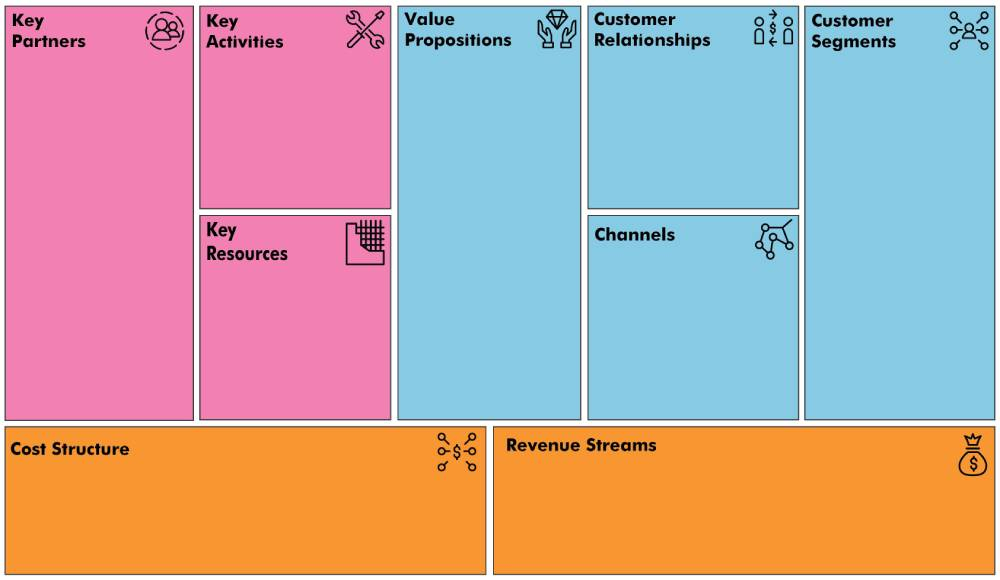
Customer Relationships
When you think about your business, you probably envision the people most important to it. We call them customers, but they could just as easily be suppliers, investors or employees. The customer relationship is the most important part of a business model because, without customers, there would be no reason to build anything else in your canvas.
You must first identify who your customers are and what they want before creating a product or service that meets their needs. You also need to understand how they will interact with your company (for example: through direct sales or indirect channels) and what factors affect those interactions (for example, economic conditions or technological advances).
Customer Segments
Customer segments are the different types of people who buy your product. The objective is to find out what they have in common—the more you can uncover, the better.
Segmentation can be based on demographics (age, gender), psychographics (lifestyle and values), or behaviour (channel use). An example of a segmentation model is shown below:
Value Propositions
The value proposition is what you offer to your customers. It’s the difference between you and your competitors. Your value proposition should be simple, easy to understand, and unique to your business.
An excellent way to think about it is this: What would you say if someone asked you what makes your company different or better than others? If it was easy for them to understand why they should choose you over other options, congratulations! You’ve got a clear and concise value proposition.
Channels
Channels are how a business reaches its customers. Channels can include retail stores, online storefronts, social media accounts and email campaigns.
Channels are typically used to deliver products or services to customers. They can also be used for communications with customers by collecting feedback and data about their experiences with your company.
Revenue Streams
Revenue streams are the ways that a company makes money. They can be divided into four categories:
- Product sales
- Service sales (e.g., consulting or design work)
- Subscription services (e.g., Netflix and Spotify)
- Advertising (e.g., Google AdSense on websites)
Many companies are also experimenting with new sources of revenue, such as licensing patents or brand extensions (e.g., Disney World). Some businesses get investment income from venture capitalists in exchange for equity ownership in the company; this is called “venture capital.”
Cost Structures
You should also include the costs of delivering the value proposition. These include salaries and wages but operational expenses such as marketing and sales, administration, facilities and equipment.
In addition to this, you should identify several other categories of cost:
- Costs associated with acquiring and retaining customers (e.g., advertising or sales commissions)
- Costs associated with providing support to customers (e.g., infrastructure)
- Costs associated with delivering products/services (e.g., raw materials)
Key Activities
- The key activities are your business’s steps to deliver the value proposition.
- How many key activities should you have? This depends on how complicated your business model is. For example, if you were building an online accounting software service, one of your key activities would be “developing accounting software”, and another would be “customer support”. But if you were writing a book about entrepreneurship and selling it on Amazon, those two activities could be combined: publishing the book via Kindle Direct Publishing (KDP).
- Are there any risks associated with this activity? Yes! Developing accounting software has plenty of risks—mainly if it’s something new or highly specialized—so let’s factor that into our calculations later. Just ensure any risks are identified somewhere in the canvas so they don’t get forgotten later when we decide what to do next!
- How long does this activity take? We’ll figure out the exact numbers for each activity later in this article, but generally speaking, most businesses spend six months and four years developing their first product before launching it publicly and entering their growth stage (where revenues start coming in). That doesn’t mean every startup takes this long; some can launch faster while others may take longer depending on where they’re starting from (e.g., if they already have a prototype) or how far along they are with research & development at that moment.”
Key Resources
The term “resources” refers to the physical and human assets required to deliver your value proposition. Resources can be tangible or intangible, meaning they can be something you can touch or smell, like land and buildings, or intangible things like patents, brand names and trademarks. To complete this section on the canvas, you will need to identify all of your tangible and intangible resources that support the delivery of your value proposition.
These are the parts of any business model.
The components of a business model canvas are the same for any business. The customer relationship is an abstract representation of each customer and their relationship to your company. It includes how they consume your product or service, how much they pay for it when they buy from you, and their expectations.
Customer segments are customers with similar needs or want (e.g., people who use your product or service). These are also known as target markets. You can define customer segments according to demographic characteristics like age, gender and location; psychographic characteristics such as attitudes toward fitness or politics; behavioural characteristics such as buying frequency; or any other helpful trait for targeting potential buyers in marketing campaigns.
Value propositions describe what makes your company different from others selling similar products or services (e.g., “We offer guaranteed delivery on every order!”). It’s important to remember that value propositions should be tailored differently depending on the segment targeted by an advertising campaign—in this way, you get more bang for your buck!
Conclusion
We know business models can be confusing, so we’re here to help you learn and understand them! The critical thing to remember is that every business model needs all these components to work correctly. If you miss one of them, your model may be ineffective. So if any of these parts seem unfamiliar or unclear at first glance, don’t worry—that’s normal! Just keep reading until all the pieces start falling into place for you.


